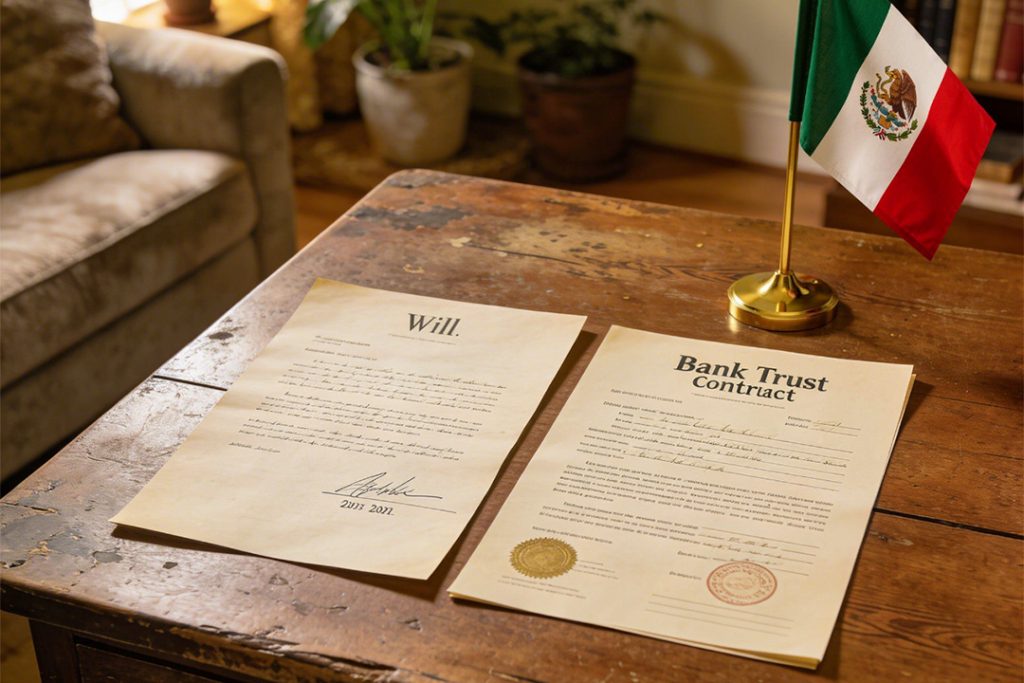
For many foreigners, owning property in Mexico—whether it's a beachfront condo on the Riviera Maya or a colonial house in San Miguel de Allende—represents a dream come true. However, when the owner passes away, that property can become a complex legal process if they don't understand how real estate inheritance works in Mexico..
The transfer of real estate doesn't happen automatically. It doesn't matter if the heir has the keys or if there's a foreign will naming them as the owner: legally, the property enters into a probate process that must be handled in Mexico.
How does real estate inheritance work in Mexico?
In Mexico, real estate is governed by the principle of territoriality: Mexican law applies, regardless of the owner's nationality.
For an heir to legally dispose of the property, they must initiate probate proceedings before a Mexican notary or judge. Only after this process is complete can the property be registered in their name in the Public Registry of Property.
Restricted Zone and Trust: The Golden Rule
One of the key aspects of real estate inheritance in Mexico for foreigners is the property's location.
Mexico has a Restricted Zone (50 km from the coast and 100 km from the borders). In these areas, foreigners acquire properties through a bank trust (fideicomiso)..
In these cases:
- The property is not inherited directly.
- The rights of the trust are inherited..
Substitute Beneficiaries
If the owner designated substitute beneficiaries in the trust agreement, the process can be considerably simplified. In practical terms, it is similar to updating the account holder on a bank account.
When there are no designated beneficiaries, the process becomes more complex and requires a formal probate procedure.
Is a foreign will valid?
One of the most frequent questions regarding real estate inheritance in Mexico is whether a will executed in the country of origin is valid.
The answer is yes, but the process is longer and more expensive. The document must:
- Be apostilled in the country of origin.
- Be translated by a certified translator in Mexico.
- Be validated by a Mexican judge.
Therefore, real estate law specialists recommend executing a Mexican will exclusively for assets located in Mexico. This reduces time, costs, and the need for international travel.
Real Estate Inheritance Taxes in Mexico
Good news for foreigners and their families: Mexico does not have a federal inheritance tax (ISR) for children, parents, or spouses.
However, associated costs must be considered:
- ISAI (Property Acquisition Tax)
- Notary fees
- Public Registry registration fees
On average, these expenses can represent between 4% and 7% of the property's value..
Estate Planning: The Real Key
Advance planning is essential to protecting your assets. Even when property is held in a trust, this instrument does not completely replace estate planning.
Many of the legal conflicts faced by foreign property owners in Mexico stem from omissions in inheritance matters.
Therefore, it is highly recommended to consult with a lawyer specializing in Mexican real estate and inheritance law.
At Property Journal, we summarize it this way:
Legal clarity is the best legacy for your real estate assets.