
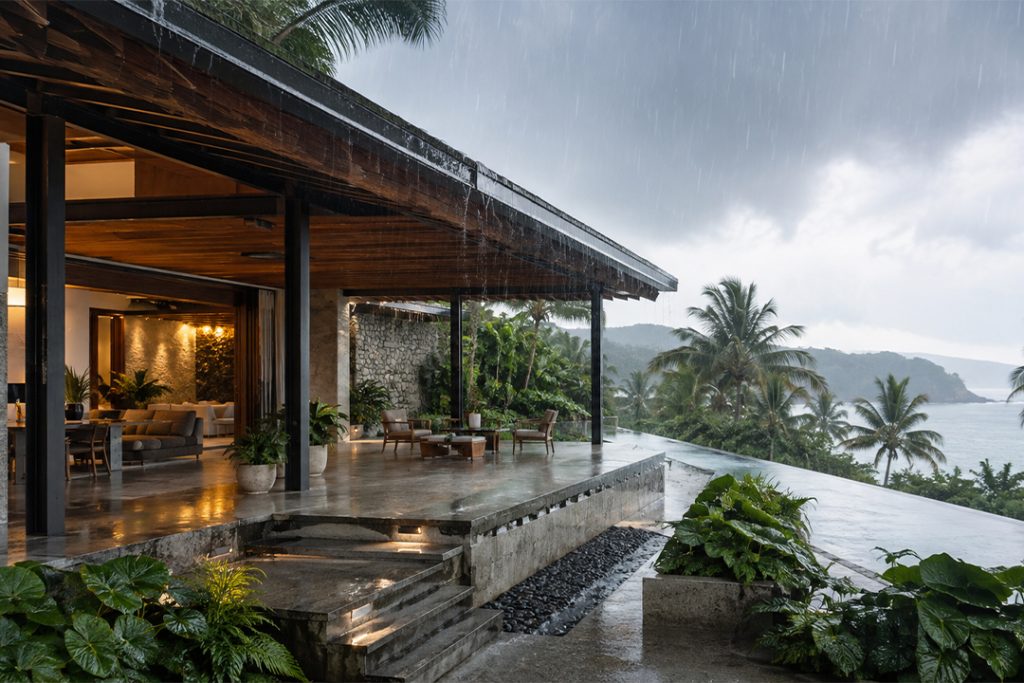
The Architecture for the rainy season in Puerto Vallarta and Riviera Nayarit cannot be limited to simply waterproofing a roof when the first storms arrive. In a region where humidity, heavy rains, and heat coincide for several months, the solution must begin with the architectural design.
Puerto Vallarta experiences an average annual rainfall of approximately 1,417 millimeters, with most of its rain concentrated between June and August, although isolated showers can continue until October. This makes water a permanent design requirement, not an eventuality.
A roof that sheds water
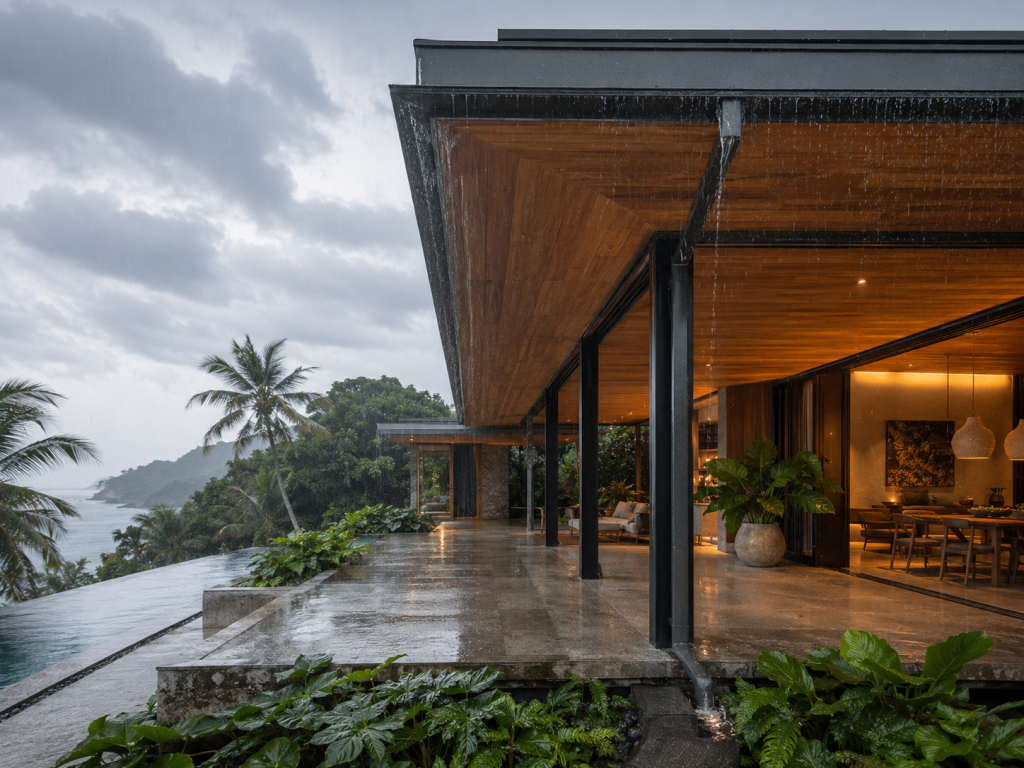
The first line of defense for a coastal home is its roof. Roofs with proper slopes, sufficient downspouts, accessible gutters, and unobstructed drainage reduce the risk of leaks and waterlogging.
Flat roofs can work, but they require correctly executed slopes, emergency overflows, and waterproofing suitable for sun exposure. The most common mistake is usually not a lack of waterproofing material, but rather a roof design that allows water to pool.
Eaves also play an essential role: they protect walls and windows from wind-driven rain while reducing direct solar radiation.
Architecture for the Rainy Season and Humidity Control
In a hot and humid climate, keeping water out is not enough. The vapor that enters and accumulates inside must also be controlled.
The building envelope must combine adequate seals, water barriers, controlled ventilation, and self-drying materials. An overly sealed house, without dehumidification, can maintain a comfortable temperature while accumulating moisture in walls, closets, and furniture.
Research on buildings in hot and humid climates indicates that reducing air intake alone does not eliminate the moisture load; HVAC systems must also be designed to dehumidify.
The terrain is also part of the project
A house should not receive runoff from streets, gardens, or neighboring properties. Exterior slopes must direct water away from the building, while terraces and access points require independent drainage systems and cleanable access points.
On sloping terrain, common south of Puerto Vallarta, soil stability, retaining walls, and natural watercourses must also be studied. Channeling water is more effective than trying to stop it.
Design to dry
A good coastal house is not one that never comes into contact with moisture, but one that can drain it and dry quickly.
Cross ventilation, covered transition zones, durable materials, elevated equipment, and construction details accessible for maintenance extend the building's lifespan.
In the dry season, many mistakes remain invisible. Rain reveals them. Therefore, architecture truly adapted to the coast doesn't fight against the climate: it understands it, channels water, and makes protection a natural part of the design.
