
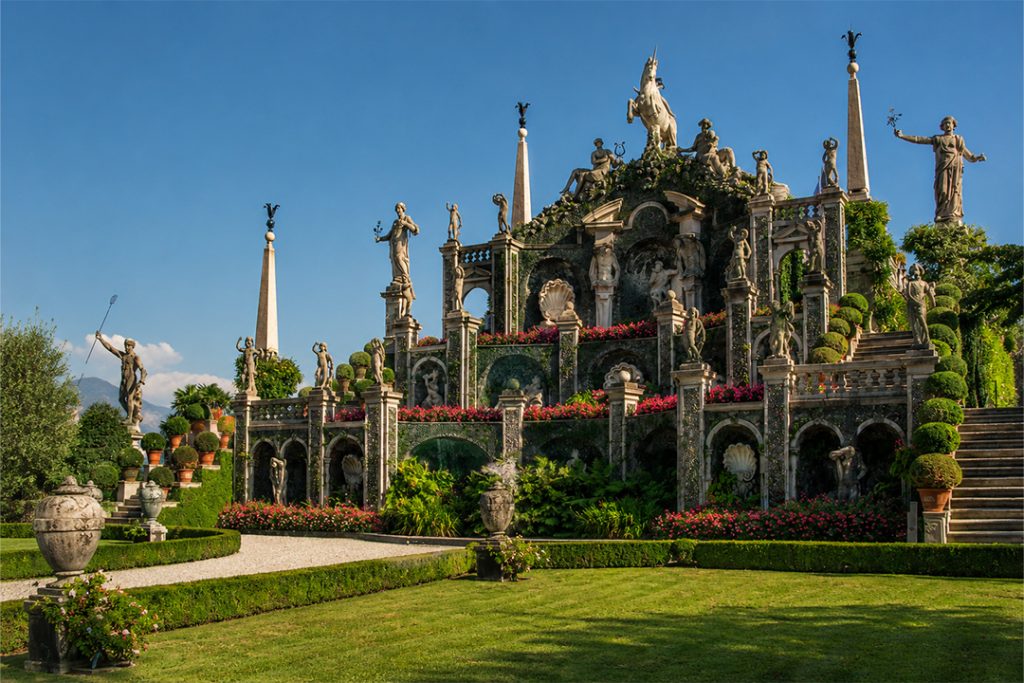
There are buildings that adapt to the landscape and others that seek to transform it. Palazzo Borromeo, on Isola Bella, firmly belongs to the latter group. Opposite Stresa, on the Italian side of Lake Maggiore, a small rocky island originally inhabited by fishermen was transformed into one of the most ambitious undertakings of the European Baroque: a monumental palace accompanied by terraced gardens that seem to extend the architecture right down to the water.
The project began in the 17th century under the Borromeo family. In the 1630s, Carlo III Borromeo initiated the construction of a residence dedicated to his wife, Isabella d’Adda—from whose name "Isola Bella" would be derived—but it was Vitaliano VI who developed much of the vision that would ultimately define the complex. The transformation continued over generations, and the site did not reach its current configuration until the 20th century.
Palazzo Borromeo: Architecture as Representation
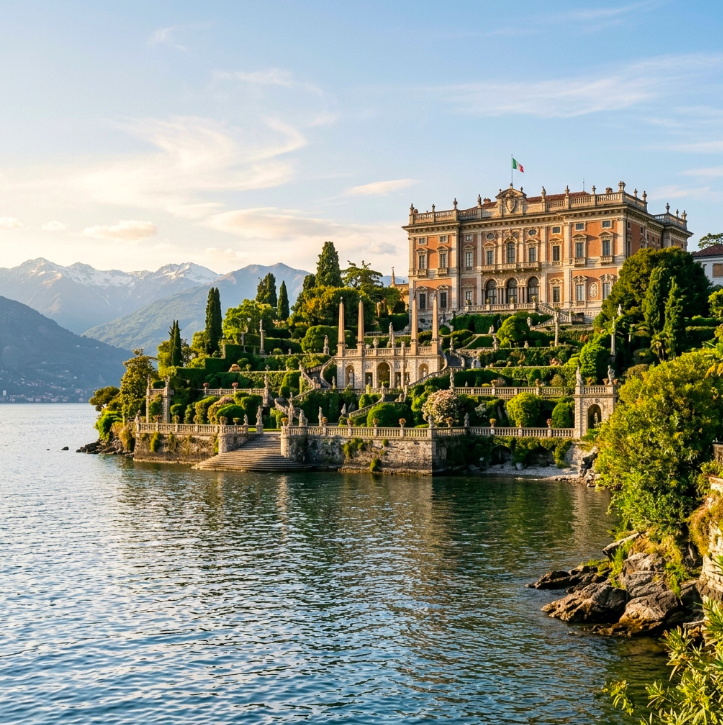
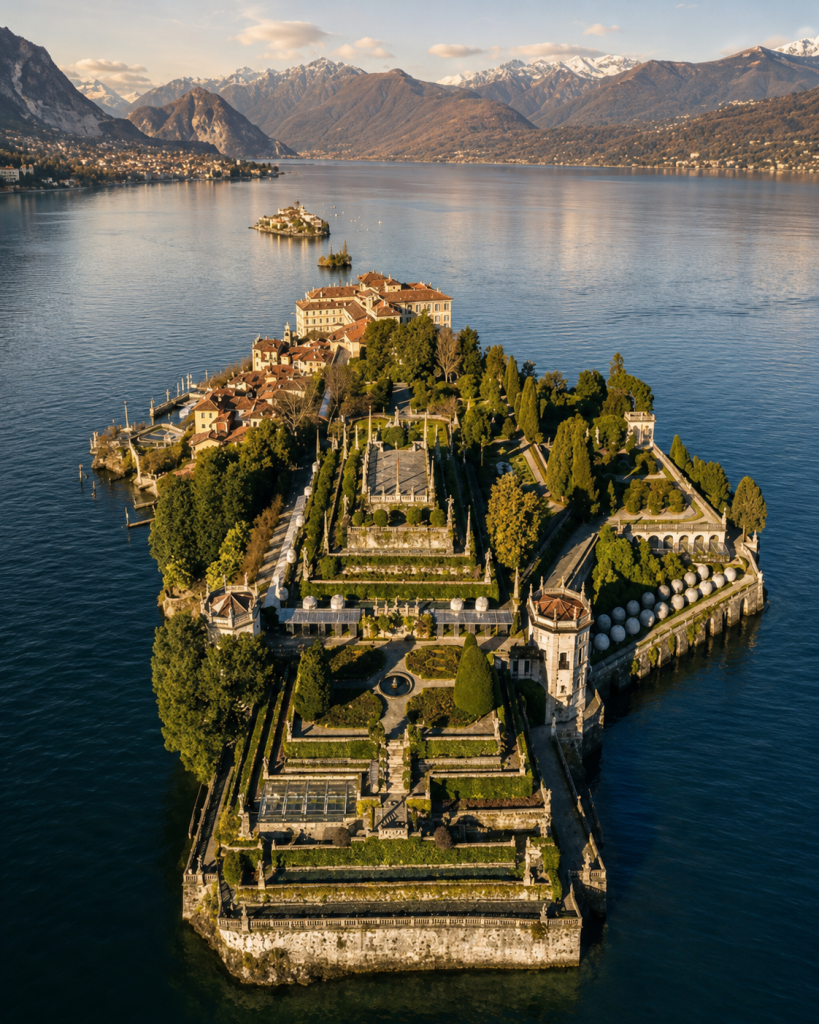
The palace cannot be understood in isolation. From the outset, the residence and the garden were conceived as parts of a single Baroque composition.
Viewed from the lake, Isola Bella takes on the appearance of a monumental vessel: the palace and the landing stage form one end, while the terraced gardens and the Teatro Massimo form the other. Architecture thus alters the overall perception of the landscape. What was once an irregular rock becomes an artificial form, instantly recognizable from a distance.
The Interior
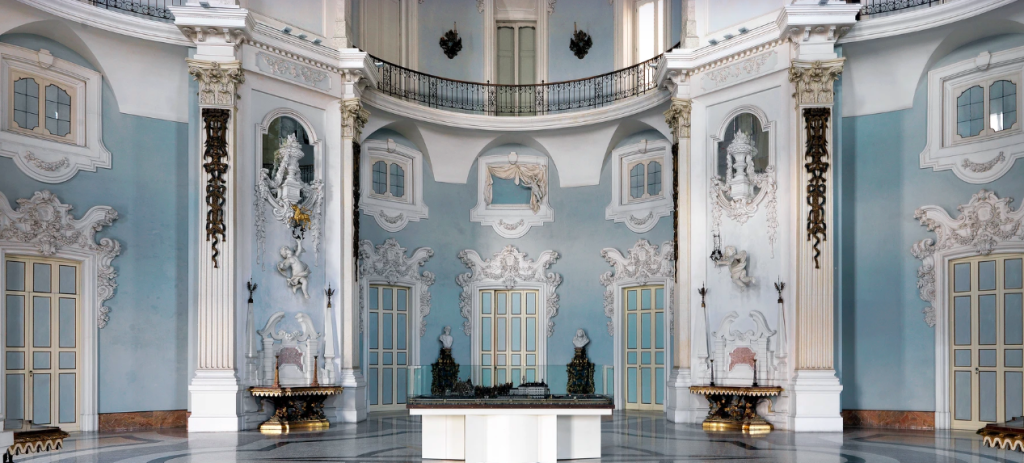
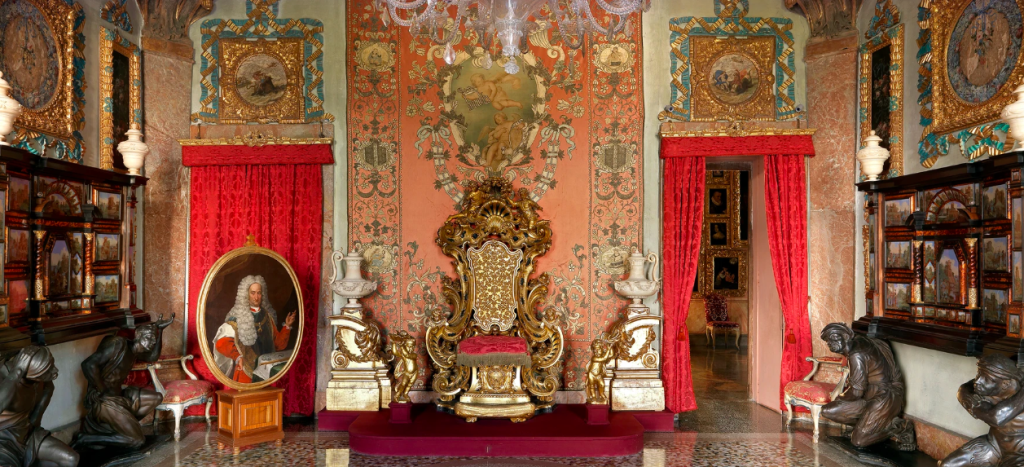
Inside, more than twenty spaces form a ceremonial sequence of halls, galleries, and rooms. Among them are the Throne Room, the Ballroom, the Tapestry Gallery, and the Berthier Gallery, which houses a collection of over 130 paintings.
But perhaps the most unique spaces are to be found below.
Grottoes For Escaping The Summer Heat
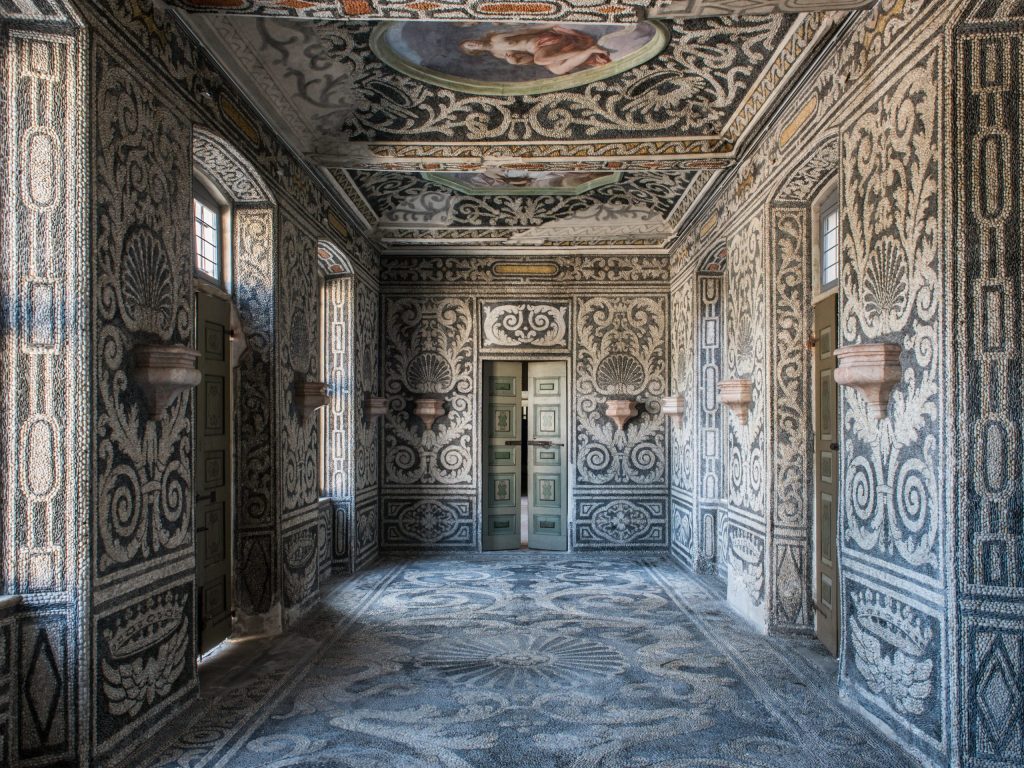
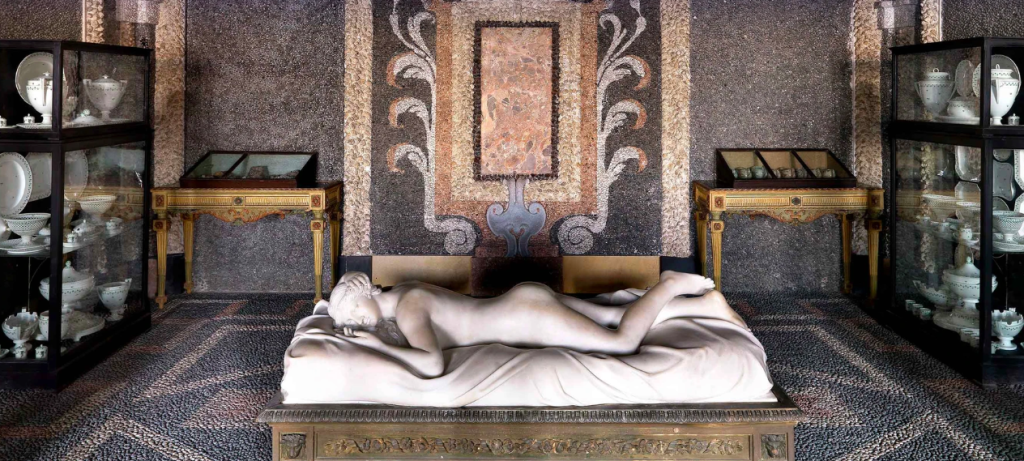
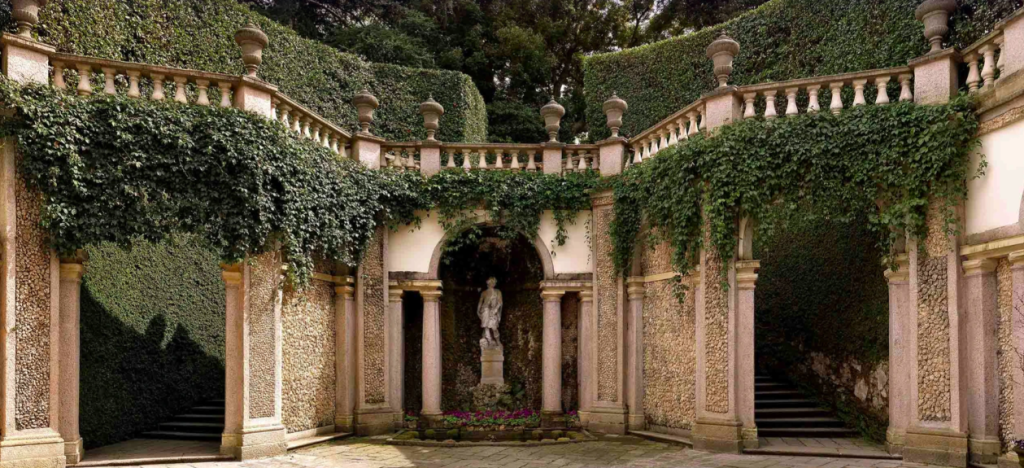
On the palace's lower level, six grottoes—clad in pebbles, tufa, marble, stucco, and shells—create a deliberately marine atmosphere. They were created at the behest of Vitaliano VI to both surprise visitors and provide a cool retreat during the hot months.
Su interés arquitectónico va más allá de la ornamentación. Son un ejemplo temprano de cómo confort climático y experiencia sensorial podían integrarse en la representación aristocrática: el visitante descendía desde los grandes salones hacia habitaciones frescas que parecían pertenecer al fondo del lago.
Un jardín construido como edificio
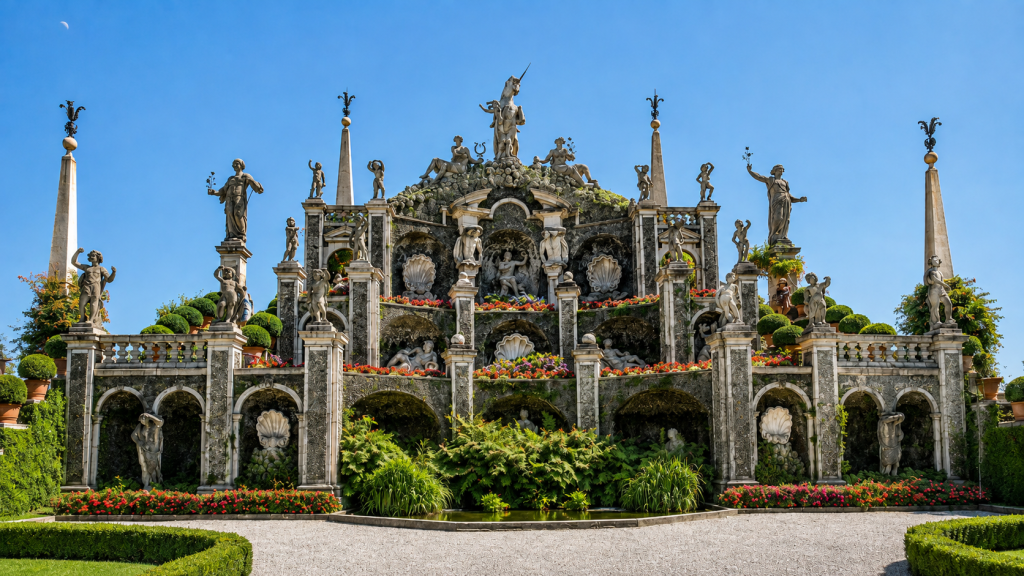
Si el palacio establece el poder de la familia Borromeo, el jardín lo convierte en espectáculo.
El jardín italiano de Isola Bella se desarrolla mediante diez terrazas superpuestas, organizadas casi como una pirámide truncada. Escalinatas, balaustradas, obeliscos, fuentes, esculturas y vegetación establecen una sucesión ascendente que culmina en el Teatro Massimo. En su punto más alto aparece el unicornio, símbolo heráldico de la familia.
Aquí la naturaleza deja de funcionar como fondo y se convierte en material arquitectónico. Los árboles delimitan perspectivas, las terrazas construyen horizontes y la vegetación comparte protagonismo con piedra y escultura.
Es precisamente esta fusión lo que hace extraordinario al conjunto: la arquitectura no termina en los muros del palacio.
Cuatro siglos construyendo una sola idea
Parte de la fascinación de Palazzo Borromeo reside en que nunca fue realmente la obra de un único arquitecto ni de una sola generación. Decenas de arquitectos, ingenieros, pintores, escultores y artesanos participaron en una transformación que se prolongó durante casi cuatro siglos. En 1948 todavía se terminaban elementos como el Salone Nuovo, la fachada norte y el gran embarcadero.
El resultado podría haber sido fragmentario. Sin embargo, conserva una idea extraordinariamente clara: convertir toda una isla en residencia, jardín, monumento y escenario.
Hoy, cuando buena parte de la arquitectura de lujo busca desaparecer dentro del paisaje, Isola Bella recuerda una postura completamente distinta. El barroco no pretendía pasar inadvertido. Quería construir perspectivas, controlar recorridos, provocar sorpresa y demostrar hasta dónde podía llegar la intervención humana.
Palazzo Borromeo no se limita a ocupar Isola Bella.
La isla misma terminó convirtiéndose en arquitectura.
