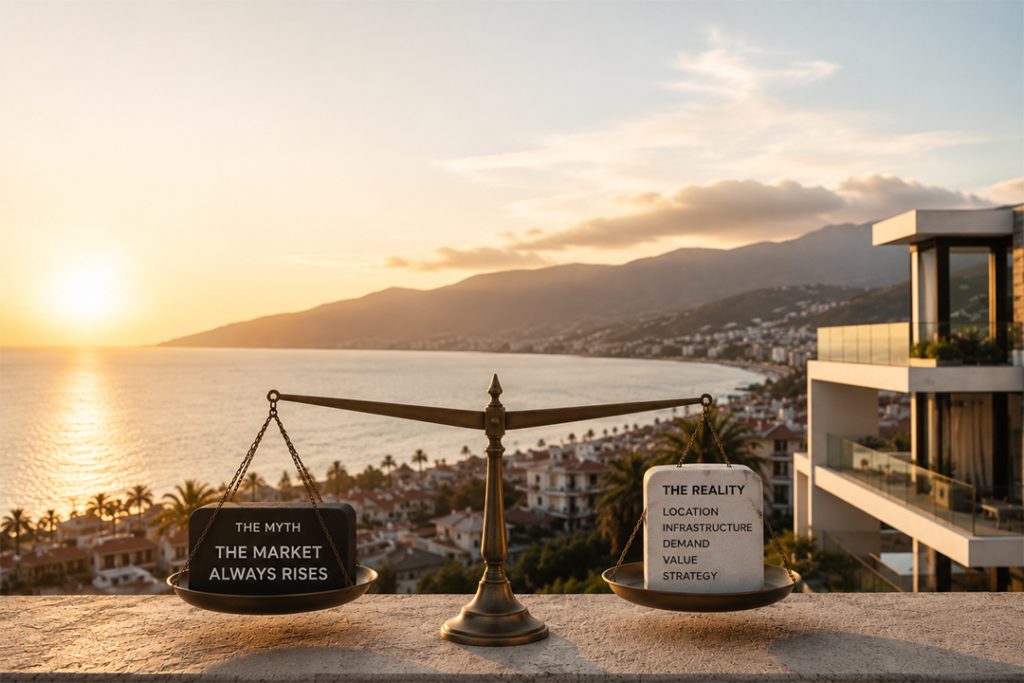
There are phrases that are repeated so often in the real estate sector that they end up being accepted as absolute truths.
“Buy now because the market always goes up.”
“You never lose money on the beach.”
“Land is no longer manufactured.”
They all contain a grain of truth. But they also represent a dangerous oversimplification.
Because although markets like Puerto Vallarta, Riviera Nayarit, Los Cabos, and the Riviera Maya have shown sustained appreciation for decades, that doesn't mean that every purchase is a good investment or that every property increases in value at the same rate..
The difference between an extraordinary investment and a mediocre one is rarely in the destination. It's in the details.
So… where does this myth come from?
Primarily from history.
Over the last thirty years, many Mexican tourist destinations experienced an exceptional combination of factors:
- growth in international tourism
- increased infrastructure
- greater air connectivity
- the arrival of foreign investment
- the expansion of the second-home market
Those who bought in the early stages, especially in areas that later became established, saw significant increases in the value of their properties.
These cases became stories that the market continues to tell, and over time, the exception began to be perceived as the rule.
El problema: confundimos la tendencia con la garantía
Existe una diferencia importante entre afirmar que un mercado tiene una tendencia de crecimiento y creer que cualquier propiedad crecerá automáticamente.
No todas las inversiones participan del mismo ciclo. Dos departamentos ubicados a menos de un kilómetro de distancia pueden tener desempeños completamente distintos después de cinco años.
¿Por qué? Porque la plusvalía depende de variables mucho más específicas que el simple nombre del destino.
El mercado no sube de manera uniforme
Una de las ideas menos comprendidas en bienes raíces es que la apreciación ocurre de forma desigual. Mientras una colonia puede experimentar un crecimiento acelerado impulsado por nueva infraestructura, otra puede permanecer prácticamente estable durante años.
Incluso dentro del mismo edificio pueden existir diferencias importantes dependiendo de factores como orientación, vistas, distribución o demanda para renta.
La plusvalía no se compra; se construye
Muchas personas imaginan la plusvalía como algo que simplemente ocurre con el paso del tiempo. En realidad, suele ser la consecuencia de procesos mucho más complejos.
Entre ellos:
- infraestructura pública;
- mejora en la conectividad;
- crecimiento del empleo;
- llegada de nuevos servicios;
- cambios demográficos;
- inversión privada;
- escasez de suelo.
Cuando estos elementos convergen, el valor inmobiliario suele responder. Cuando no existen, el crecimiento puede desacelerarse considerablemente.
Entonces, ¿por qué la gente sigue comprando?
Porque, pese a todo, el mercado turístico mexicano sigue teniendo fundamentos sólidos.
La demanda internacional continúa siendo relevante.
México mantiene ventajas competitivas difíciles de replicar:
- cercanía con Estados Unidos y Canadá;
- clima favorable durante gran parte del año;
- costo de vida competitivo;
- amplia oferta turística;
- comunidades internacionales ya consolidadas.
Estos factores explican por qué muchos inversionistas siguen viendo oportunidades en destinos como Puerto Vallarta o Riviera Nayarit.
Pero los inversionistas más experimentados ya no preguntan únicamente “¿va a subir?”
Preguntan algo mucho más interesante:
“¿Por qué debería subir?”
La pregunta correcta antes de comprar
Más que intentar adivinar el futuro, conviene evaluar qué está impulsando el presente.
Algunas preguntas pueden ofrecer mejores respuestas que cualquier promesa de plusvalía:
- ¿Hay proyectos de infraestructura anunciados o en ejecución?
- ¿La población permanente está creciendo o solo aumenta el turismo?
- ¿Existe suficiente oferta de servicios para sostener ese crecimiento?
- ¿El mercado depende de un solo tipo de comprador?
- ¿Qué tan fácil sería vender esta propiedad dentro de diez años?
Responderlas requiere más trabajo que repetir un eslogan.
Pero también reduce considerablemente el riesgo.
El verdadero riesgo no es que el mercado deje de crecer
El riesgo está comprar una propiedad equivocada dentro de un mercado correcto o pagar un precio que ya incorpora toda la expectativa de crecimiento futuro.
En ambos casos, la inversión puede tardar muchos más años en generar los rendimientos esperados.
¿Qué hace que una propiedad sí tenga mayores probabilidades de apreciarse?
No existe una fórmula infalible, pero sí ciertos patrones que históricamente han acompañado a los mercados con mejor desempeño:
- ubicaciones con buena conectividad;
- proyectos en zonas donde la infraestructura apenas comienza a desarrollarse;
- propiedades con características difíciles de replicar;
- desarrollos bien administrados;
- mercados con demanda tanto turística como residencial.
En otras palabras, la plusvalía suele favorecer a quienes compran antes de que el consenso descubra una oportunidad, no después.
El mercado inmobiliario en destinos turísticos puede seguir creciendo durante muchos años, pero esa realidad no convierte a todas las propiedades en buenas inversiones. Los mercados no recompensan únicamente la paciencia, también premian el análisis.
Quizá el mayor error sea pensar que la plusvalía es automática, cuando en realidad es el resultado de entender dónde está ocurriendo el cambio… antes de que sea evidente para todos.