
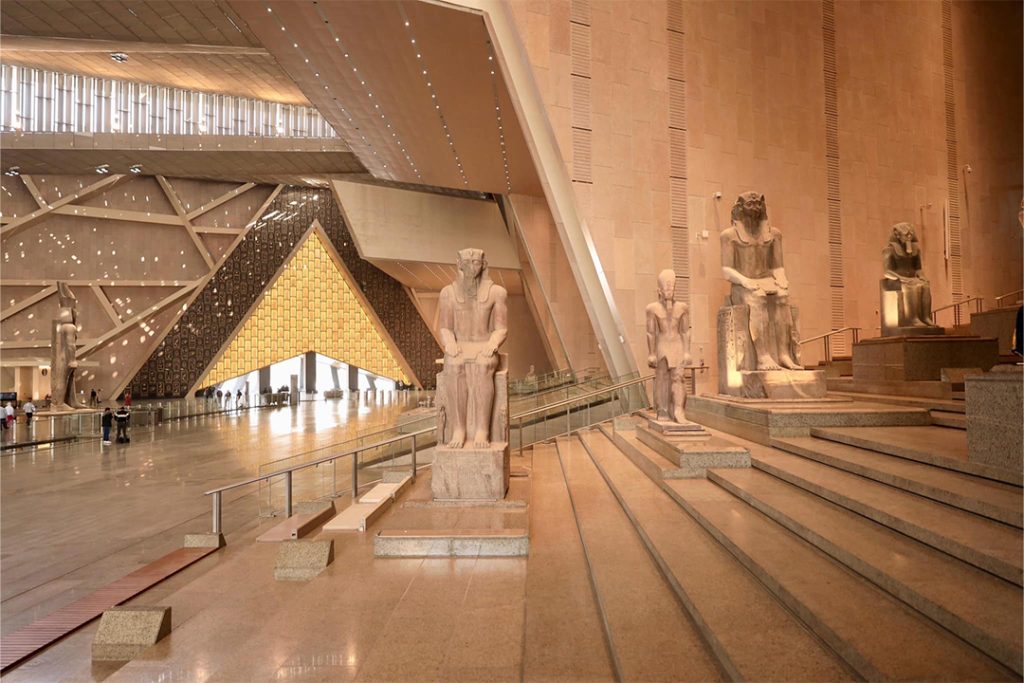
From the moment you approach it, it becomes clear that the Grand Egyptian Museum (GEM) is not simply a repository of antiquities, but a declaration of principles for contemporary architecture. With a built area of 168,000 square meters on a 50-hectare site, this structure, designed by Heneghan Peng Architects , stands as the world's largest museum dedicated to a single civilization. Its façade, a network of translucent stone triangular forms, establishes a constant visual dialogue with the neighboring pyramids, masterfully integrating the building into the ancient horizon.
Upon crossing the threshold, the experience becomes tangible. The design achieves what seems impossible in the desert: an internal temperature up to 10°C lower than the outside temperature. This feat of thermal engineering is based on bioclimatic principles, utilizing the thermal mass of its thick walls and a ventilated façade that acts as a shield against solar radiation. Hot air rises through high-ceilinged atriums and is naturally evacuated, creating a comfortable microclimate that redefines efficiency in extreme climates.
The central feature of the complex is its Grand Staircase, a monumental 60-meter structure that houses 87 statues of kings and deities, guiding visitors to the upper galleries. However, the museum's technological heart lies in the main atrium, where the colossal 82-ton statue of Ramses IIstands. Thanks to a precise solar alignment designed by modern engineers, the sun's rays penetrate the building twice a year—on February 21 and October 21—to directly illuminate the pharaoh's face, recreating the ancient phenomenon of the Abu Simbel temples.
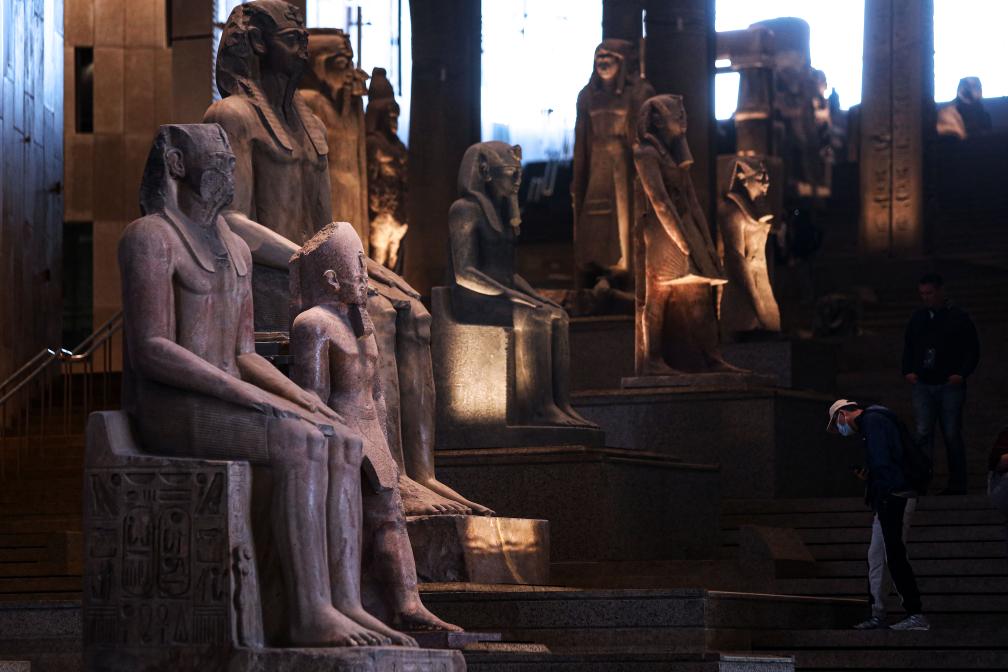
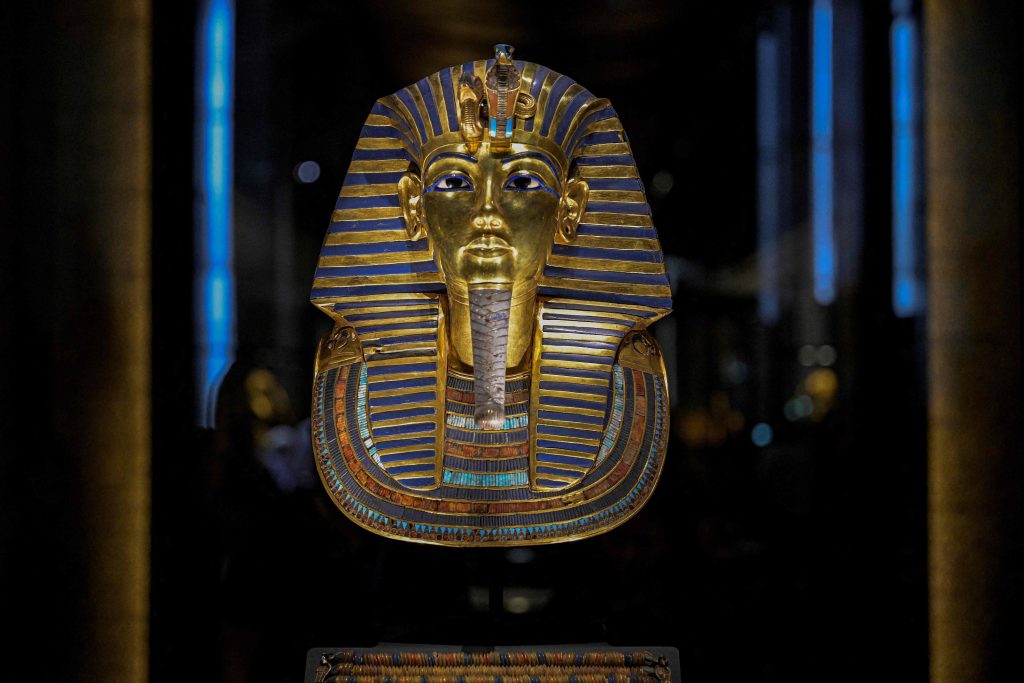
As for its collection, the museum houses more than 100,000 archaeological pieces. For the first time in history, the 5,000 objects that make up Tutankhamun's treasure are exhibited in the same space, accompanied by the imposing Sun Boat of Khufu, which was moved to its own pavilion within the complex.
Beyond the galleries, the GEM operates as a self-contained cultural city prepared to receive 15,000 visitors daily. Its services include:
- An international-level conference center and a 3D cinema.
- A museum specifically designed for children.
- Seventeen state-of-the-art conservation laboratories for the scientific study of the artifacts.
- Extensive themed gardens that recreate the flora of the Nile Valley, along with a culinary offering comprised of eight restaurants.
- The complex also includes an exclusive shopping area housing luxury boutiques and various shops where certified replicas and high-end handicrafts can be purchased.
- These services not only enhance the tourist experience but also solidify the GEM as a mixed-use real estate asset that boosts the profitability and sophistication of the tourism sector in the region.
It can be stated, without a doubt, that this project not only raises the standard of global museography, but also consolidates Egypt as a great tourist asset, where the precision of 21st century technology is made available to the ancient pharaohs.
